Organisational Policy and Procedures
pornography telegram links Join 31+ Top Rated Adult Channels Now!
Find and Join Top Rated Pornography Telegram Links
Finding and joining top-rated pornography Telegram links can be an exciting journey for those interested in adult content sharing. Telegram adult channels are popular places where users can access various types of adult material on Telegram. If you want to explore this world, you can easily join adult Telegram groups that cater to your interests.
To get started, you can search online to find adult Telegram links that lead to these channels and groups. Many users share their favorite links on forums and social media, making it easier for you to discover new content. Remember to always be cautious and ensure that the channels you join are safe and trustworthy.
Once you find the right links, joining adult Telegram groups is usually a simple process. Just click on the link, and you will be directed to the group where you can start engaging with other members. Enjoy exploring the vast array of adult content available on Telegram!
Telegram Adult Groups and Their Features
Telegram adult groups offer a unique space for users interested in adult content. These groups, often referred to as Telegram NSFW groups, provide a variety of features that enhance the experience of accessing adult content on Telegram.
Here are some key features of these groups:
- Privacy: Many users appreciate the anonymity that Telegram offers, allowing them to explore adult content without revealing their identity.
- Variety of Content: Users can find a wide range of adult material, from images to videos, catering to different preferences.
- Community Interaction: Adult Telegram communities often have active discussions, allowing members to share their thoughts and experiences.
What to Expect from Telegram Adult Channels
When you join adult Telegram channels, you can expect a diverse range of adult Telegram content sharing. These channels are designed to provide members with easy access to adult content on Telegram channels.
Some common aspects include:
- Regular Updates: Many channels frequently update their content, ensuring that members have access to fresh material.
- User Engagement: Channels often encourage interaction, allowing users to comment and share their opinions on the content.
- Curated Content: Some channels focus on specific niches, making it easier for users to find exactly what they are looking for.
How Adult Entertainment on Telegram Enhances Your Experience
The adult Telegram link directory is a valuable resource for users seeking to navigate the adult Telegram network. With this directory, users can easily find adult content Telegram access points that suit their interests.
Benefits of using this directory include:
- Ease of Navigation: Users can quickly find links to various adult groups and channels without extensive searching.
- Diverse Options: The directory often features a wide range of categories, catering to different tastes and preferences.
- Community Recommendations: Many directories include user reviews, helping newcomers choose the best channels to join.
Similar Channels to Explore
If you’re looking for more adult content, there are many similar channels to explore on Telegram. These channels can provide you with a variety of adult material and community interactions.
You can find adult Telegram group access through various methods, including searching online or using Telegram adult group finder tools. These tools help you discover new channels that fit your interests.
Here are some ways to find similar channels:
- Online Forums: Many users share their favorite adult Telegram links on forums.
- Social Media: Platforms like Twitter and Reddit often have posts about Telegram adult link sharing.
- Telegram Bots: Some bots can help you find adult groups based on your preferences.
Popular Telegram Porn Channels
When searching for popular Telegram porn channels, you can use an adult Telegram link aggregator. This tool helps you gather links from various sources into one place, making it easier to find what you want.
You can also perform an adult Telegram link search to discover new channels. Here are some popular channels you might want to check out:
- Naughty Videos: A channel dedicated to sharing adult videos.
- Adult Memes: A fun channel for adult-themed memes.
- Live Cam Shows: A channel featuring live adult performances.
Using these resources can enhance your experience and help you find the content you enjoy most.
Rating of Telegram Groups
When it comes to rating Telegram groups, especially those focused on adult content, there are several factors to consider. Users often look for quality, safety, and engagement when accessing adult Telegram group access.
Understanding how to evaluate these groups can help you find the best options available.
Criteria for Evaluating Adult Telegram Channels
To effectively assess adult Telegram channels, you should consider the following criteria:
- Content Quality: Check if the adult content on Telegram channels is high-quality and meets your preferences.
- User Engagement: Look for channels that encourage interaction among members, making the experience more enjoyable.
- Safety Measures: Ensure that the channels have rules in place to protect user privacy and maintain a safe environment.
By using these criteria, you can find reliable adult Telegram link access and enjoy a better experience in the world of adult content.
Frequently Asked Questions
Many people have questions about adult content Telegram sharing and how to safely access these channels. Here are some common inquiries.
What are the risks of joining pornography Telegram links?
Joining pornography Telegram links can come with certain risks.
- Privacy Concerns: Your personal information might be exposed if you join unsafe groups.
- Malware: Some links may lead to harmful software that can damage your device.
- Inappropriate Content: You might encounter content that is not suitable for all audiences.
It’s important to be cautious when accessing adult content on Telegram channels to avoid these risks.
How can I find safe and reliable Telegram adult channels?
Finding safe and reliable Telegram adult channels can be done through a few methods.
- Adult Telegram Link Directory: This is a list of verified channels that you can trust.
- Adult Telegram Group Finder: Use tools that help you locate groups based on your interests.
By using these resources, you can discover channels that provide safe adult content Telegram access.
Are there any age restrictions for accessing adult content on Telegram?
Yes, there are age restrictions for accessing adult content on Telegram.
- Age Verification: Many adult Telegram communities require users to confirm their age before joining.
- Legal Age: Users must be of legal age in their country to access adult content Telegram access.
Always check the rules of the community to ensure you are following the guidelines.
3 tips for your Use of Restraint policy

The new Health and Disability Standards come into effect in February 2022. At the Policy Place we’re updating our online policies for our members. We’ve just finished updating the Use of Restraint policy.
If your policies are due for an update to come into line with the new Health and Disability standards then now is a good time to join the Policy Place online policy and procedure service. Contact us now to find out more.
But if you’re into DIY here are some tips on what to cover in your Use of Restraint policy.
The goal is elimination
Your policy purpose should clearly state upfront your agency’s intent to eliminate or at least, minimise the use of restraint against any client.
The purpose should reflect throughout your policy and procedure. Importantly, require that restraint be used only as a last resort and only after alternatives like de-escalation have been tried.
Assessment and planning are important
If a person is identified during assessment to have challenging behaviours that may necessitate the use of restraint, this should be addressed in planning with that person and their family, whānau, other supports.
In this context, everyone can come to a common understanding and agreement about relevant behavioural triggers, what works, doesn’t work, relevant cultural values and how, when and what should be applied to address challenging behaviour if prevention and de-escalation don’t work.
Accountability is crucial
The recent release of the Abuse in Care interim report in Aotearoa/NZ highlights the importance of accountability for the use of restraints on people. This is a key requirement of the Health and Disability Standard for Use of Restraint.
Keep a record
It means that your policy and procedure should ensure that a record is kept of details like:
- when, why and how restraint was used
- the impact and outcome of the restraint
- support and debriefing that was provided or offered to the person
- how the use of the restraint was monitored
- how a recurrence can be prevented in the future.
Report and improve
It also means that your policy and procedure should require reporting. Firstly, as an incident report. Secondly, that aggregate data on restraint incidents are shared at all levels of the organisation so that trends and systemic issues can be identified and addressed.
Lastly, your policy and procedure should support accountability for change and improvement.
If improvements are indicated from review at a client and/or aggregate level of restraint incidents, your policy should require these to be made unless there is good reason not to do so (aka an exceptional reason not to). The decision with reasons should be documented.
There’s a lot to do to prepare for the new Standards. So let us help.
Get in contact to find out more about our online policy and procedure service at the Policy Place.
How to make policies an atomic habit in your organisation

Listening to Brenee Brown’s interview with James Clear, the author of Atomic Habits, I was reminded about the necessity for policies to be an atomic habit in health, social and education services.
Goals are the results we want. Policies and procedures provide a system to get there. But too often policies and procedures are relegated to compliance. We forget their relevance to our goals. So how can we keep reminding ourselves?
Better still how we can make referring to policies and procedures an organisational atomic habit?
4 criteria for an atomic habit
James Clear proposes four criteria for building a new habit. These can be used to help build a policy-use habit in your organisation.
The four criteria are that the habit is “obvious”, “easy,” “attractive” and “satisfying.”
Make it obvious

Stone composition on the beach.
If you want people to do something, they’re more likely to do it if it’s there for them – they see it, remember it etc. Conversely, out of sight, out of mind.
Policies are often not “top of mind” when they should be in a organisation and that can reflect that they are buried in a mass of other organisational files and business. It seems easier, “more obvious” in this context to ask your manager about what to do rather than refer to the relevant policy.
To make using organisational policies an obvious choice for staff, the organisation at all levels needs to promote and actively encourage its member to use the policies:
- when staff come to you with questions, refer them to the policies
- each time policies are reviewed and updated and when relevant to discussion go through them with your team.
Make your policies and procedures visible to staff so they are reminded of them. For example, in the Policy Place online service, all the policies and procedures are obvious as a lefthand menu. By clicking on a policy category, staff can view relevant policies.
Make it attractive

checking her home finances online
Policies rarely conjure an attractive picture. They’re more likely to be associated with dusty old manuals and text-heavy documents/
But at the Policy Place, we show it can be done. Policies can be attractive. Our members’ policies carry their own branding. We include pictures and youtube links to videos and use hyperlinks and pages to reduce text.
We want people to use the polices so let’s make them as attractive as possible.
Make it easy

Organisational policies should help your agency give practical effect to and comply with legislative and regulatory requirements. They should make things easier.
But the challenge with policies is that it’s not just a one-off exercise. You have to keep them up-to-date with law and regulatory changes etc and review them regularly to keep in line with practice. This can be hard when you have many other operational priorities.
But if policies aren’t kept updated, it becomes hard for staff to trust that they provide correct and reliable guidance. At the Policy Place we also see policies that have become complex and confusing because people have added to them in a hurry to address an issue without considering the ramifications for other policies.
Make it satisfying

For staff to become habitual policy users, they need to derive some benefit from using policies. If policies are simple and provide clear guidance without undue restriction then staff will benefit from using them. They will have the reward of an answer to their question in the immediate sense. Longer-term, as they get used to referring to policies, they will feel safer and more confident in their identity as practitioners.
At the PolicyPlace we’re always dealing with busy people, who often feel overwhelmed by the job of having to do and updated policies. We understand and want to help. That’s why we have our online policy system.
Contact us to join our online system. You will get your policies online. Even better, we keep the policies reviewed and updated.
Mandatory vaccination policies and procedures

It’s all on with mandatory vaccination for social, health, education and prison staff in Aotearoa.
Employing agencies need to move quickly on their vaccination policy and procedure.
The Mandate
The COVID-19 Public Health Response (Vaccinations) Amendment Order (No 3) 2021 has commenced. It provides for mandatory vaccination of certain roles in health, disability, education, and prison services (“mandated roles”).
At the Policy Place, we’ve been busy updating our policies and procedures for our members, because the pressure is on for services that have staff in mandated roles. The legislation sets a fast pace.
Staff in mandated roles in health, disability and education services must receive their first vaccination by 15 November 2021. Staff involved with prisons must receive their first vaccination by 6 November 2021.
In this post, we outline some key responsibilities for employers and staff affected by the new Public Health order.
Management responsibilities
In the new regime, management’s responsibilities will include to:
- Notify staff in writing that their roles are affected by legal requirements. Staff should be told of legal timeframes, consequence of non-compliance and how they may prove vaccination within the timeframes.
- Actively protect rights of tangata whenua and address barriers to vaccination for Māori and Pasifika
- Enable staff (especially those in mandated roles) to be vaccinated in work hours
- Proactively and in good faith engage with staff about any issues or concerns about vaccination
- Being prepared to stand-down staff who are unable to provide written confirmation of vaccination by required dates (eg 15 November for education, health and disability service workers; 6 November for prison staff)
- Set up a system for recording vaccination information from staff (eg contact details, dates of vaccination, exemption from vaccination).
Staff/kaimahi responsibilities
Key responsibilities of staff will include to:
- Get vaccinated within the legal timeframes
- Be informed (by reliable means) about vaccination and the legal requirement
- Engage in good faith with management about any concerns or issues with vaccination (eg if dispute they are in a mandated role)
- Provide management with written proof of vaccination (by registering on My Covid Record and providing a screen-shot or printout of the result)
- If relevant, obtain an exemption from a GP or other suitable health practitioner and provide written confirmation.
What if vaccination is not legally prescribed?
Check out our previous posts on risk assessing roles to decide if vaccination should be required.
Just because a role is not required by law at this stage to be vaccinated, does not prevent an employer from requiring vaccination where they assess high risk.
Every organisation will need to demonstrate due diligence in managing the health and safety of Covid-19 in the workplace and use of vaccination to mitigate risk.
It’s likely to be an ongoing process.
Given the nature of community transmission, risks are likely to change and so are decisions about the necessity of vaccination.
Contact us at the Policy Place if you need a hand with your vaccination policy and procedure.
How to achieve balance in your vaccination policy

Aotearoa has now joined other countries to require health and community support workers and teachers to be vaccinated for Covid-19. At the Policy Place, we’re updating our Vaccination policy and procedure for our members to prepare for the changes.
But what about in other areas of social and community services? Can and should your organisation’s policies and procedures require staff to be vaccinated for Covid-19?
Short answer: it’s a balancing act.
A careful approach
Worksafe has consistently advised that a cautious approach be taken to imposing a vaccination requirement. More recently, it has listed some questions for management and staff to consider when developing their policy on vaccination and considering a requirement for vaccination. Check out the questions here to help you draft your Vaccination policy and procedure.
Risk assessment in your vaccination policy
For social and community services, who are not going to be covered by the Public Health Order requirements for vaccination, your organisation’s policies and procedures should provide for job roles to be assessed for risks of exposure to and transmission of Covid-19.
To assess risks, we suggest you consider the following:
- Public Health and sector/ industry advice on vaccination
- the extent to which the role exposes staff to a risk of exposure to Covid-19
- whether the role involves working with people who are vulnerable to severe disease/death if they are infected
- how many people the role interacts with (could it lead to ‘super-spreading’ event if the person in the role was to contract COVID-19)
- the effectiveness of other infection/ transmission control measures (eg masks; office barriers) at minimising the risk of infection and transmission across staff and those we work with
- other relevant factors (eg rate of community transmission).
Don’t discriminate in your vaccination policy
It’s also important to consider if there are likely to be any discriminatory impacts.
We know that more needs to be done to support tangata whenua, Pasifika and younger people to be vaccinated. A blanket requirement for new and existing staff to be vaccinated could therefore have a discriminatory impact on these groups.
It’s about balancing…..
As we’ve said before, your policy and procedure on vaccination needs to be carefully balanced.
On the one hand, legal responsibilities to protect kaimahi and clients from preventable harm must be fulfilled. On the other hand, your vaccination policy and procedure must avoid discriminatory impacts and give you enough flexibility to work with staff who are unable to be or haven’t yet been vaccinated on options to keep safe in the workplace.
If you’re wanting help with your vaccination policy, contact us – we’ll be 😊 to work with you!
3 policy and procedure tips for effective financial governance

It’s often hard for a not-for-profit organisation to work out the role a board should have in the financial management of the organisation versus the role of management. Policies and procedures are vital!
At the Policy Place Ltd, we help organisations with online and bespoke policies and procedures to guide boards and managers in the effective financial management of an organisation. Financial management policies are required by a range of accreditation and compliance systems including the Social Sector Accreditation Standards, Health and Disability Standards and NZQA.
Here are our tips on how policies and procedures can help you work through the thorny divide of financial management and financial governance in your agency.
Tip 1
The Board is about governance so it needs to be able to satisfy itself that all tenets of effective financial management are in place. Financial policies and procedures about the following are therefore key:
- Financial delegations
- Financial controls around expenditure
- Financial records and reporting
- Budget planning, approval and monitoring
- Investment planning
- Prevention and detection of fraud
- Auditing
- Policies
- Management of assets and resources
- Criteria to guide fundraising decisions
Tip 2
The board needs to understand and act within the parameters of the organisation’s Constitution/ Trust Deed. Constitutions are typically concerned with :
- managing any conflict around financial interests
- a board’s power to delegate
- a board’s power to invest organisational funds
- provision for annual planning and auditing processes.
The board does not usually have to manage the day-to-day financial detail of the organisation. That’s the manager’s job.
However, one of its core functions is to protect and safeguard the long-term financial viability of the agency. Policies and procedures, therefore, need to ensure that a board has sufficient oversight of operations from a financial viewpoint, that financial milestones are being reviewed and updated, financial records are being kept, expenditure and income is on track and within budget, and that the board is getting enough information to ensure the organisation’s financial longevity.
Tip 3
The board needs to be transparent and accountable for its decisions. So it needs to make sure, through the organisation’s policies and procedures, that:
- roles in the financial management of the organisation are clear and accounted for
- everyone understands their responsibility to prevent and report concerns about fraudulent behaviour
- there are clear processes for koha and donations
- there are regular internal and external audits
- staff understand when and how they can be reimbursed for work-related expenses
- there is regular reporting on budget milestones and variance from budget lines.
- ensure that at all times, proper accounting records are kept that correctly record the assets, transactions, and financial affairs
- reimbursements to board members for reasonable expenses incurred through role-related duties are transparent.
Without policy and procedure to guide financial management, your organisation is unlikely to meet its compliance requirements. Worse, it is likely to be highly unstable.
Don’t delay. If you think you need more guidance as an organisation about the board’s role and financial governance responsibilities, contact us. We can help!
Your workplace vaccination policy and procedure
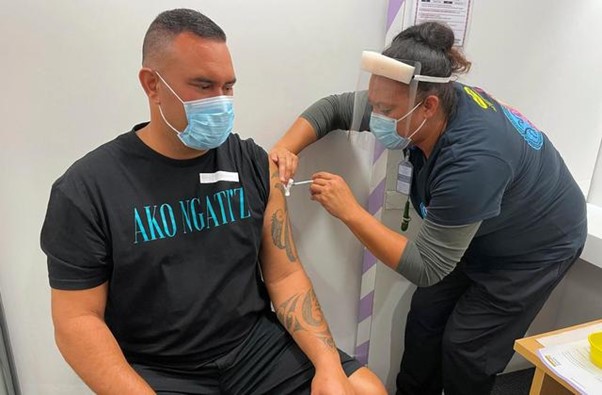
You might think it’s easy when it comes to requiring staff to get vaccinated. They should be given the choice – jab or job, right?
Wrong. It’s not so simple at all, especially when it comes to vaccinations for existing staff in frontline positions eg health and social service staff.
It’s a balancing act

There’s some important interests like human rights and public health to think about and balance:
- the right to refuse and give informed consent to medical treatment under the NZ Bill of Rights Act 1990 (sections 10&11); Code of Health and Disability Rights (sections 6 & 7)
- an employer’s obligation to take all due care to provide a safe and healthy workplace
- a worker’s obligation to take reasonable care to avoid causing harm to themselves and others
- the duty on an agency to take reasonable care to avoid causing foreseeable harm to clients, consumers etc.
And, amongst this, community levels of COVID-19 are also relevant and must be considered.
A positive work culture
Good faith and relationships in the workplace are also important to consider. Public debate too easily descends into blaming and name-calling.
You want to avoid to the greatest extent possible division and friction in the workplace about vaccination. The world is divided enough and a positive work culture is integral to retaining staff and achieving good results.
What to cover in your vaccination policy and procedure
See here for our Key Tips for your Workplace Vaccination policy and procedure.
Policy Intent
Another key tip is to be upfront with your policy intent. If you want to encourage vaccination state it, state it at the front or start of your policy. For example, that –
” the organisation supports kaimahi/staff to obtain vaccination as an important way to mitigate risks of infection of COVID 19.”
Likewise, if you’re worried about workplace divide and impact on culture, include it in your intent. As we suggested in Key Tips for your Workplace Vaccination policy and procedure, an important way to show good faith is to get staff input to the development and review of the policy and procedure.
Warning
Warning, ensure your policy requirements are consistent with your intent. If you’re only wanting to encourage vaccination, then stick to that. Don’t venture into mandating vaccination.
Any requirement for vaccination must be justifiable given the risks of a job and an assessment that vaccination as opposed to others measures is the best and safest way of managing those risks. You can’t require vaccination as a way of encouraging it.
Risk assessment
In How your policy and procedure can bridge the vaccination divide we gave some ideas to head off division and disharmony in the workplace in relation to vaccination. A key strategy is to be rational about it.
Your policy and procedure should reflect an objective risk assessment of roles in your workforce. This risk assessment will help justify why vaccination is a requirement for some positions. It will also help you identify roles where vaccination may not be necessary.
Information and support
Where reasonably practicable, support staff to get vaccinated eg time off for them and their dependents to get vaccinated and to recover if there are any after-effects; referral to public health information about vaccination.
Be an open book when it comes to information. Make sure staff are informed about all the issues relating to Covid-19, vaccination and how it’s relevant to their work and whānau.
For staff who are seem more hesitant about vaccination, engage with them in good faith and support them to address their concerns and questions. An in-person or at least one-to-one engagement with the kaimahi/staff member (with the option to invite their whānau) is likely to be most effective.
Check out Key Tips for your Workplace Vaccination policy and procedure for some more ideas about how to support vaccination.
Prove it

Don’t forget to require proof of vaccination in your policy and procedure. Testing regimes have shown the danger of relying on self-reports.
Require the evidence to be kept on file. You are likely to need it if vaccinations are going to be required on a regular or annual basis to be effective.
Address the challenge
Your policy should include a process for kaimahi/staff, who are unable to be vaccinated because of a pre-existing health condition, and for those who refuse vaccination.
You don’t want these staff to hide they are not vaccinated and the risks this brings. So outlining the process and addressing fears like dismissal is important.
Incorporating your Good faith in Employment policy and procedure will be important. The process could involve steps like the following:
- assessment and application of other protections to the relevant staff (eg PPE, masks) for the person to continue in their role in light of the assessed risks (above)
- an agreed change of duties or position where there is less risk
- through to resignation and termination (if unable to adequately address safety risks.)
Get ready
Good news – if you’re a member of our online policy and procedure service, we’ve already got you covered.
If you’re not a member, now’s the time to start on your DIY workplace vaccination policy and procedure. Check out our posts on vaccination and DIY policy and procedure for help.
Policy and procedure ideas for Te Wiki o Te Reo Māori

It’s time to celebrate the first language of Aotearoa with Te Wiki o Te Reo Māori.
Kia kaha te reo Māori!
Te reo Māori is a taonga protected by the Treaty of Waitangi. The Crown and its funded entities like education, social and health agencies, has a duty to actively protect it.
What does active protection mean?
The duty of active protection has been considered by the Waitangi Tribunal in a number of its decisions, including in its report on the Kōhanga Reo claim case and its more recent report on Oranga Tamariki – He Pāharakeke, he Rito Whakakīkinga Whāruarua.
Put simply, it means that if, as a country, we’ve caused harm (eg by suppression of Te Reo Māori; policies and procedures embedding institutional racism), we have to take active steps to address the impacts along with steps to prevent future harm.
Steps can, of course, be taken in different ways depending on what your agency does and who it serves. But it’s an important starter that you have a statement of commitment with some key steps you’re going to take laid out in your organisational policies and procedures.
A plan can help
Another way to support your progress and to counteract Anglo-centrism (ie using only English) is to specifically plan with staff about how the agency will fulfill its duty to actively protect and nurture the language.
We’ve suggested this previously as a way to keep a focus on and progress with building capability in te reo Māori.
The plan should be supported by your policies and procedures. It should be included in your regular planning and reviews as an organisation.
Accreditation and compliance for health, disability, education and social service purposes require cultural competence, cultural safety and performance of obligations under Te Tiriti o Waitangi. Learning and developing competency in te reo me ngā tīkanga Māori to the extent we can should therefore be a priority.
Some food for thought
Here’s some questions to consider when developing and/or revising your plan or strategy to progress Te Reo Māori in your workplace:
- What’s the level of competence and comfort with the use of te reo me ngā tīkanga Māori across board and staff?
- What’s the language of the area/rohe?
- How is usage encouraged and supported within the organisation and promoted more widely?
- How do Māori know they are welcome and have a right to speak te reo when engaging with the agency?
- Is there opportunity for you to check for and respond to people’s cultural preferences (in terms of practice and language)?
- How is language and culture expertise valued in recruitment and performance reviews?
- What are some kupu Māori that can be used as part of your agency’s everyday language/terminology?
Some strategies
If you’re short on ideas for what to include in your plan, you could consider including some or all of the following:
- policy and procedures supporting kaimahi/staff and volunteers to pronounce kupu Māori correctly, particularly the names of people and places and frequently used phrases
- incentives for staff to commence or further their learning of te reo
- stronger provision in policies and procedures for cultural supervision and cultural advice
- making the reo more visible in the organisation (eg signage, labels)
- remuneration for competency in te reo me ngā tīkanga Māori and recognition of expertise as a core job competency
- supporting national promotions of te reo (eg Te Wiki o te reo Māori).
So … kōrero Māori and enjoy
Enjoy Te wiki o Te Reo Māori and let’s commit together to building our ability to nurture and protect the beautiful language of Aotearoa!
Online policies and procedures to stay current

It’s important but tough to keep your policies and procedures up with the changing risks of COVID-19.
In Aotearoa, over the last 2 weeks and in the space of less than 24 hours, we’ve plunged from Alert Level 1 to Level 4 restrictions. Soon, we’ll be operating at different levels of restrictions. It’s complex. And it’s constantly changing.
So when it comes to your policies and procedures, you can’t rest on your laurels.
It’s important that your policies and procedures provide staff with the guidance they need to operate safely in the relevant levels of restrictions.
You can’t rely on what you did last time under lockdown.
The legal rules for the different alert levels have changed to keep up with new knowledge about the Delta virus and how it is transmitted. Even as I write this, workplace restrictions are being reviewed to see if there are ways to strengthen safeguards to prevent transmission of the virus to and by Essential Workers.
So it’s a moving feast when it comes to keeping up with Covid-related changes in the workplace.
Going online with your policies and procedures has never been more important
It’s never been more important to have your policies and procedures online so that your people can access them anywhere, anytime.
It might be a big shift, especially if you still prefer to print off and work with paper-based policies. But we can all adjust.
After all, we used to have cheques. Now they are all but gone. It was hard to imagine living without cash but since the pandemic, cashless has become the new norm.
How to go online
The first step is to identify when, who and in what circumstances your organisation uses and needs its policies eg are you subject to the Social Sector Accreditation or Health and Disability Standards? Do your volunteers and outreach workers need access?
On this basis, you can then consider what options might work best for you, your kaimahi and board. For DIY options – you could consider setting up your own set of policies on Google Docs or Sharepoint.
If you’re going with DIY, once you’ve decided on the option, you will need to review your policies. Consider and evaluate your policies against relevant law and other compliance obligations. If they’re not compliant you will need to update them.
Last step, upload them and set up access. Think about who needs access and to what and set up the permissions.
We’re so glad to offer our 24/7 online policy and procedure service
If you want ready -made access to online policies that are reviewed and updated, then our online policy and procedure service could do the trick.
It’s our most popular product.
Why? Because you get:
- online policies and procedures
- customisation with your brand, logo and unique processes
- your policies regularly reviewed and updated for law, regulation and other changes
- notes to support you to implement policies with kaimahi/staff.
Subscribers love the review and updating part of our service. They no longer have to worry about trying to keep up-to-date with law and can focus on their other mahi. They tell us a big load off!
Just do it – go online
Policy access anytime, anywhere, for your organisation is a key way of ensuring that outreach and remote service provision meet minimum quality standards.
Whatever way you want to do it – now is the time to go online and move away from messy Word files and outdated PDF documents that no one can find. It’s a no brainer!
It can be done and if you want support – get in touch.
Online policies and procedures – it’s a no-brainer!

So you’ve joined the Policy Place online policy service. Welcome aboard!
It’s our most popular service especially for agencies and practitioners who have to comply with the Social Sector Accreditation Standards and Health and Disability Standards.
It’s a no-brainer. Not only do we provide online policies to help your compliance. We also review and update them regularly so that you and your staff can get on with the other mahi/work you need to do.
To help you understand the system more, here are answers to some common questions that we get.

Why is there a policy on something we didn’t previously have a policy for?
Your set of online policies are aimed at addressing the Health and Disability and Social Sector Accreditation Standards. You will be joined to a policy page because we’ve thought it would be helpful and relevant to your service given your compliance needs and good practice requirements. If you think otherwise then let us know. Likewise, let us know if you think you are missing something.
Does every member have the same policies as us?
To set each agency up with their particular set of policy pages, we consider what compliance needs they have, the services they provide and their existing policy documents. This means that services may be set up with a similar set of policies but that these may have been customised in different ways.
Can we edit and add in other policies?
Members can’t edit or add to policy content. This is to protect the core content that is common across subscribers.
Do we have to review and update the online policies?
No, we review and update your policy set. When you join us, you will receive a Schedule for when policy pages will be reviewed. You will be notified before each review and invited to provide feedback. Your feedback along with feedback from others and relevant law, policy and practice changes is considered and used for updating. You are then advised of the policy updates.
How do we get our staff and board to use the online policy system?
It can be hard to get used to a new system, but people can adapt. They may have always used paper-based policies so going online means entering the unknown. But people can do it. If we want to survive in a pandemic, enable remote work and reduce waste – online policies and procedures is the only way to go!
Can we get extra online policies?
Yes, we can develop and upload additional policies for you at an additional cost.
What happens if we sign up?
We will schedule you in and ask you to send us your existing policies and procedures, your branding and any other information you think will help us customise the policies for you. Once we’ve finished we send you a log in. From then on, we keep in touch through reviews and updates. We talk more about the system here.
Can we put our existing policies and procedures on the system?
No you can’t. We keep the cost low for subscribers and can provide reviews and updates only by maintaining core common content. We therefore provide only limited customisation. If you want a fully bespoke set of policies, we can provide this on an one-off basis. You are welcome to contact us to discuss.