Organisational Policy and Procedures
Improving policies and procedures for bullying and harassment
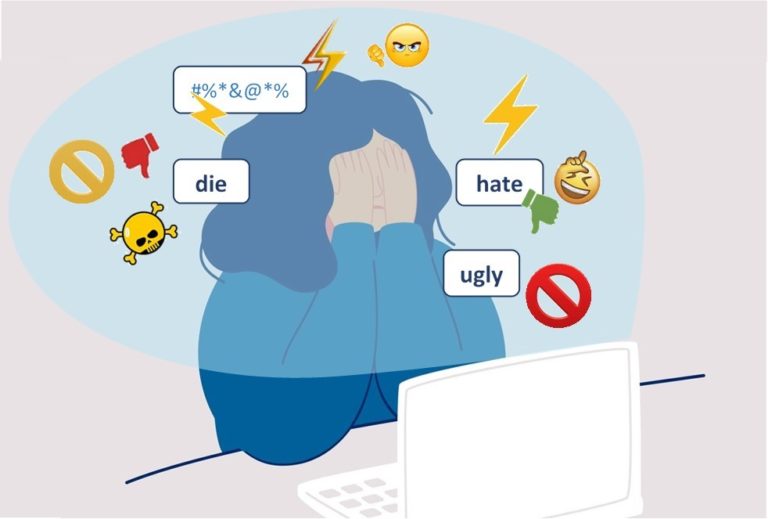
Recent changes took effect for lawyers in July this year in Aotearoa. The changes address important gaps in the rules of conduct for lawyers relating to bullying, sexual harassment, racial harassment, violence and discrimination.
They are worth considering if your policies and procedures on bullying and harassment are in need of an update.
The case for change
Before the changes, lawyers were required to comply with general law and not bully and harass clients or colleagues. Behaviour that brings the profession into disrepute was also prohibited.
But there was no clarity in the Lawyers and Conveyancers Act (Lawyers: Conduct and Client Care) Rules 2008 (the Rules) about what these behaviours looked like or involved. Unlike social and health services, lawyers were not required to have policies and procedures to help them comply with their obligations to not bully or harass.
That’s now changed
Amendments to the Rules now define bullying, sexual harassment, racial harassment and violence. Policies and procedures to help compliance with the Rules are now required and there are new reporting obligations.
Some of these changes are addressed below for the purpose of considering how they might be used in policies and procedures of social, health and education organisations.
Change 1
Probably the most important change is the inclusion of new definitions in the Rules of bullying, harassment and violence. There are similarities with the Human Rights Act definitions. But there are also some big differences.
A big difference is that conduct may amount to harassment under the new Rules even if the person at whom it is directed doesn’t feel harassed or was not directly impacted. The crux is whether the harassing behaviour would likely be seen as unwelcome or offensive to that person whether or not it’s conveyed to the person.
This means that sexual and racial harassment for lawyers covers a broader range of behaviour than what’s covered in the Human Rights Act 1993. Some examples of sexual harassment are:
- Personal, sexually offensive comments.
- Sexual or smutty jokes.
- Provocative posters with a sexual connotation.
- Hints or promises of preferential treatment in exchange for sex.
- Threats of differential treatment if sexual activity is not offered.
- Sexual assault and rape.
Racial harassment examples are:
- Jokes and adverse comments in the workplace about a person’s race
- Copying the way a person speaks
- Deliberately mispronouncing names or words in a person’s language/culture.
The Rules define violence broadly to include sexual violence, physical violence, psychological violence, sexual abuse and sexual assault. Psychological violence isn’t defined. But it is likely to be interpreted similarly to cover situations of psychological abuse (as in the Family Violence Act 2018) and to cover behaviours like “put-downs”, loitering near a workplace and intimidation.
Change 2
Under the new Rules, lawyers will now be required to have policies and systems in place to prevent and protect all persons engaged or employed by their legal practice from bullying, discrimination, harassment, racial harassment, sexual harassment, or violence and other unacceptable conduct (section 11(2)).
They must also have a designated staff member whose job is to ensure compliance with the Rules (section 11(3)). That person must report to the Law Society on any case where a warning or dismissal is issued for bullying, violence, discrimination, harassment, racial or sexual harassment or where the alleged offender leaves before an allegation is able to be adequately investigated (section 11(4))
The implications for social and health services
Policies and procedures for social, health and education agencies that address bullying, harassment and discrimination typically align with the Human Rights Act 1993 and the Employment Relations Act 2000. It’s timely to revise them.
Adopting the definitions of bullying, harassment and violence used in the Rules will maintain alignment with this legislation but would help improve organisational policies and procedures. It’s worth thinking about.
We recently reviewed our bullying and harassment policy pages
We recently reviewed our bullying and harassment policy pages in our online policy and procedure service. As part of the review, we considered the definitions in the new Rules, relevant legislation and feedback from our members. We updated the policies and as with all reviews we do, we advised our members of the changes made and provided notes for them to use to update staff about the changes.
If you don’t want to miss out on what we did through that review, contact us now to find out more about joining our online policy and procedure service. It’s our most popular product for anyone with compliance needs relating to the social sector and health and disability standards.
Contact us to find out more.
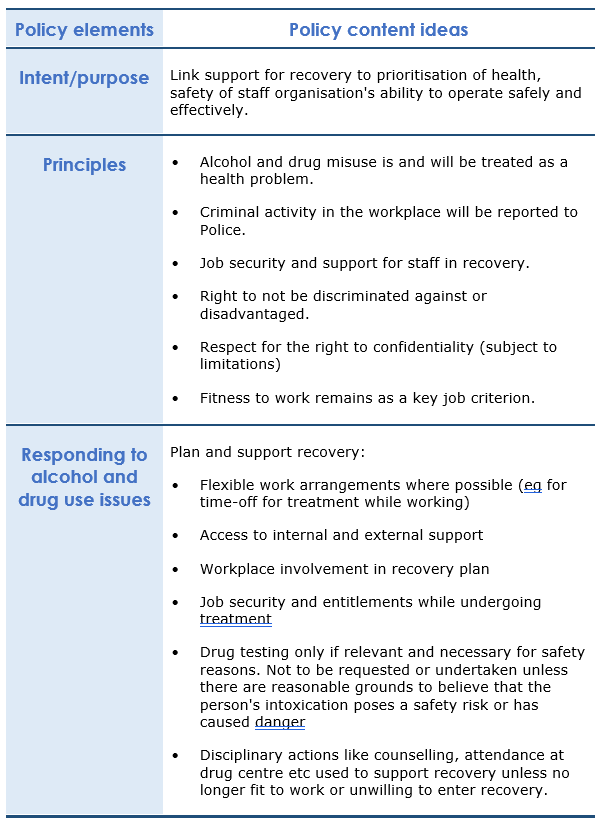
Policies and procedures for A&D recovery in the workplace

We need a recovery approach to alcohol and drug use as a society.
It’s been advocated in the criminal justice system so a health rather than a criminal approach would apply for drug and alcohol-related offending. (See, for example, He Waka Roimata pp 65-67; Rights, respect & recovery: alcohol & drug treatment strategy)
More recently, its been recommended by the Waitangi Tribunal as the preferred response to substance abuse and addiction issues of parents of tamariki involved in the statutory care system (see Tribunal Report: He Pāharakeke, he Rito Whakakīkinga Whāruarua).
Making a difference with HR policies and procedures
We can all get behind this move to a recovery approach with our HR policies and procedures.
Too often, HR policies on alcohol and drugs in the workplace are narrowly framed around alcohol and drug testing and the consequences. They are usually punitive.
In the social and health services, we expect better of our client services. Alongside prohibiting drugs and alcohol we would also focus on recovery and support. So why not a similar approach in policies and procedures for staff?
Alcohol and drug testing may be important for safety- sensitive work. But there’s got to be more to it.
Our staffing policies need to be more balanced. They should outline if alcohol is allowed/not allowed in the workplace and the consequences of being intoxicated while at work alongside policy and procedure aimed at:
- preventing and educating staff about alcohol and drug use in the workplace
- supporting staff to speak up early if they have concerns about their drinking or drug use, and
- supporting staff with recovery.
Below, we give some ideas to help get you started with new or revised policy and procedure content on alcohol and drug use in the workplace.
Contact us if you want help with this or other policies and procedures. We provide balanced and humane policies.
For social and health services, our most popular service is the online policy and procedure service. It includes regular reviews and updates of policies. It means you don’t miss opportunities to support new or different approaches to hard issues like alcohol and drugs through your workplace policies and procedures.
5 policy and procedure tips for good recordkeeping

Have you experienced, as a client in the health or social service system, being asked to repeat your story numerous times? Being given inconsistent and conflicting advice by practitioners about the same thing?
We had recent experience of this when my dad was admitted to hospital. Individually, staff were caring towards my dad. However, time after time, we were told different stories about tests to be done, next steps etc.
While staff were trying to be helpful, the conflicting stories gradually eroded our confidence in the quality of care dad was receiving.
The experience reminded me about the importance of recordkeeping – keeping good records and using them to inform whānau/client service delivery. That every health and social service should have policies and procedures about keeping and using client records.
Health and Disability and Social Sector requirements
The importance of good records is reflected in the Health and Disability and Social Sector Accreditation Standards.
Both sets of standards require the timely and accurate taking and safeguarding of client notes. For example, it is a health and disability requirement that consumer information is uniquely identified, recorded, current, confidential, and accessed when required. Guidance for this standard (NZS 8134:1:2:208 Consumer Information Management Systems 2.9) states that client notes should be:
- entered by multiple practitioners in a continuous record for each client
- entered in a timely manner
- be factual and objective, and
- signed by the practitioner/author with date and time entered.
The Social Sector Accreditation Standards also has extensive obligations in relation to recordkeeping.

Your policies and procedures
Keeping and updating whānau/client records can seem a bureaucratic task and not as important as service delivery matters. But without good records, it is difficult to provide responsive and quality services. It is much more likely that clients will be asked to repeat their stories and given conflicting and inconsistent advice.
The challenge for your Recordkeeping policy and procedure is to bridge the gap between policy and practice – to help staff understand the connection between using and keeping records and quality service.
Here are some ideas on how to do this in your policy and procedure:
- Start with a strong policy intent. At the Policy Place, for example, the stated intent of our Client Recordkeeping policy includes clients not being asked to repeat themselves.
- Link recordkeeping obligations to specific phases of a service eg assessment, monitoring, closure of case so that staff are reminded that all interactions with the client count and need to be recorded.
- Make it easy for staff to enter accurate and contemporaneous records. For example, provide tablets or ipads to enter or transfer information into electronic records; include supports for staff who use English as a second language.
- Incorporate privacy safeguards so that staff and clients are re-assured that their personal information will be treated respectfully and carefully.
- Include a requirement to obtain and reflect client/whānau feedback in the record.
If you want help with your policies and procedures…
Give us a ring or email us at the Policy Place. We want to help you deliver quality services supported by relevant and up-to-date policies and procedures.
Through our online service, we give you the option of policies and procedures that can be easily accessed by your staff and board members anywhere anytime. We review them and keep them updated so when staff are looking for what’s expected in relation to client records, privacy etc they know they can be assured they are looking at current (not outdated) policy requirements.
No more multiple versions. No more confusion. You get just one version: the most up-to-date version.
Risky business – when offending hits the workplace

The case of Philip Barnes was recently laid bare in New Zealand media when his name suppression order was lifted. It’s a good reminder about what not to do when, as a manager, you learn that a staff member may have been involved in offending.
The case
In 2017, International Accreditation New Zealand (IANZ) management learned that Barnes (a General Manager) was involved in a Police investigation of spying in a gym changing room. Police uplifted Barnes’ computer from IANZ and returned it a few days later.
In June 2018, Barnes pleaded guilty to making an intimate visual recording. He sought and got name suppression. In 2020, he was discharged without conviction and granted permanent name suppression. Both orders were successfully appealed by Police and recently, the name suppression order was lifted.
While Barnes was being investigated by Police, IANZ conducted an investigation. A minimal investigation. They questioned Barnes and accepted his assurances that he was involved, basically, as “someone in the wrong place at the wrong time.”
3 lessons
Don’t turn a blind eye
In this case, offending occurred outside work. Even so, as a manager, you can’t assume that the offending will not impact on the business.
An employee’s conduct outside of work may bring an agency into disrepute. This was clearly a risk for IANZ.
Turning a blind eye, by accepting Barnes’ explanation for the Police investigation without checking objective facts, exposed IANZ to significant risk.
Even if offending is alleged to have occurred outside work, as a manager, it’s important that you make reasonable inquires to apprise yourself of the facts.
You don’t have to duplicate the Police investigation. It’s important not to interfere with it.
But it is important that you make sufficient inquiry to fully understand the nature and possible consequences of the allegation(s) to your staff, organisation and client base.
Don’t assume innocence or guilt
We all want to believe the best of people, particularly of staff who we work beside each day and we know to be hardworking. Conversely, we may be more inclined to think a staff member is guilty if we don’t like them.
Either way, hold off. Resist any such assumption.
Your best bet is to be as dispassionate as possible about the allegation(s), while being compassionate and fair to the staff member concerned and any affected staff or others. This will enable you to undertake a reasonable and balanced inquiry into the nature of the allegation(s) and scope the risks associated with them.
Assess and manage risk
The major omissions in the IANZ/Barnes case were the failure to make a reasonable inquiry into the Police investigation. Secondly, IANZ failed to fully scope, assess and manage risks, including risk to its reputation as an agency that’s all about upholding standards.
Risk assessment and management are key tasks for management when confronted with alleged offending by an employee.
Risks to the victim(s), staff member, clients, colleagues, and to the reputation of the agency must all be assessed.
Mitigations established as necessary. They might involve suspension, a change of duties, extra supervision, change of workplace or work hours, etc – depending on the situation, level and nature of risk(s). Mitigations need to be worked out with the employee concerned and their effectiveness monitored and adjusted accordingly.
So…
Learn from what IANZ didn’t do.
Review your policies and procedures to make sure they guide you and your staff to respond if staff become involved in a Police investigation.
At the Policy Place we’ve got you covered if you’re a member of our online policy service. Risk management is an important feature of our online policies eg policies on Background and Child Safety Checking, Quality Assurance, Service delivery and Health and Safety.
If you want to know you’re covered with good policies that are reviewed and kept up-to-date contact us to join the online policy service or book a free consultation to talk about your needs.
5 essentials for your record retention policy and procedure

Are you getting lost in a pile-up of records and don’t know what to do with them?
If so, it’s time to get cracking with your policy and procedure on retention and disposal of records. Check your existing policy and procedure is being implemented as it should be or if it needs review and updating.
Haven’t got a record retention policy? Then now is the time to develop one.
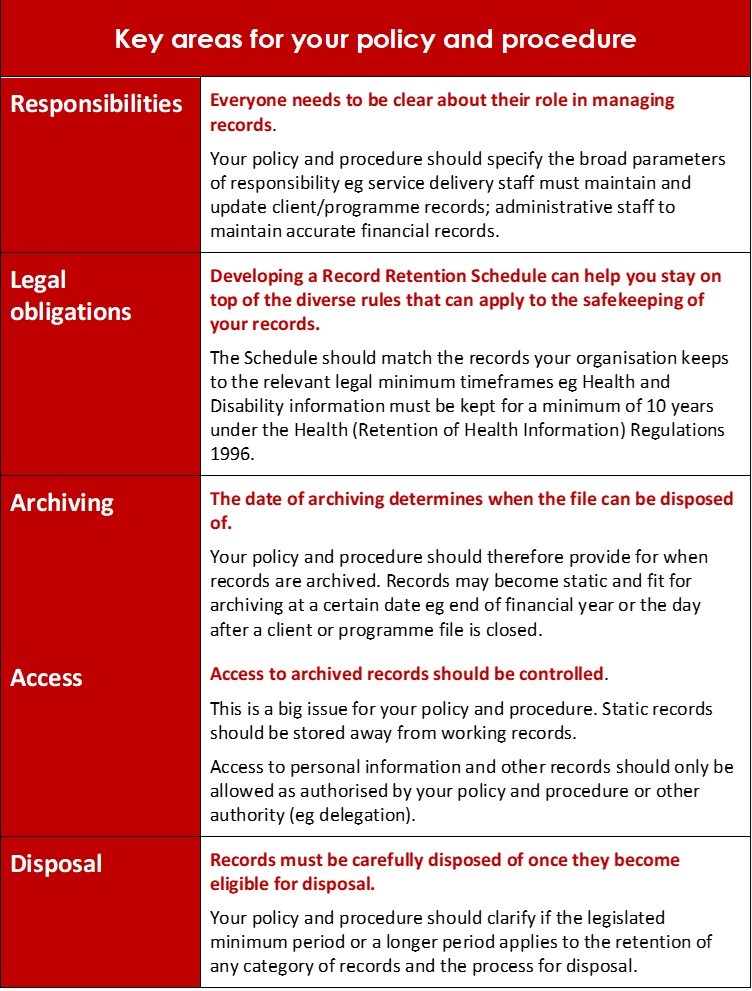
Here are some essentials to cover off in a record retention policy.
Some helpful links
Want to know more about your obligations under the Privacy Act 2020 that commenced in December? Check out our blog on the changes.
For guidance on archiving records check out this blog.
For help with your policies and procedures contact us.
How your policy and procedure can bridge the vaccination divide

Covid-19 vaccination is going to be the light at the end of the long pandemic tunnel. In Aotearoa/New Zealand we now have a guide about when we are likely to enter the light.
But is it the light? As vaccinations start to roll out, there’s more public debate about the consequences of not getting vaccinated.
Big issues to resolve
Are we now going to be divided by regulations for vaccinated and non-vaccinated people? What about the ethical and social issues involved?
It’s not looking pretty if we’re facing a future of sanctioned “haves” and “have nots”. Yet, a future with more illness and deaths from Covid-19 and the consequent need for more controls and restrictions in the workplace and other areas looks equally dire.
There’s a lot of issues to resolve. Public discussion about social and legal regulation associated with Covid-19 vaccinations is likely to therefore continue for some time.
Workplace issues
Meantime, it’s important that NZ workplaces continue to use pandemic controls. Social distancing and hygiene practices should be adhered to regardless of vaccination status.
It’s also important that workplaces involved in frontline delivery of health and social services get their policies and procedures on vaccination sorted. Last time, we posted some suggestions for what should be covered in your workplace vaccination policy and procedure.
Today, given the prospect of social divides around vaccination, we suggest that another big challenge for your policy and procedure is to address the risks of division and acrimony in the workplace around vaccinations.
Tips
Our 3 tips for your workplace vaccination policy are to:
- take a risk-based approach so that any requirements for vaccination will be justified by reference to likely health effects
- support kaimahi/staff to make their decisions on an informed basis
- communicate with kaimahi/staff from beginning to end about the policy. Be open to feedback and to the possibility of making adjustments and changes as you go along.
There’s enough division in the world already. Workplaces have often been a microcosm of social divides. We need to learn from past mistakes, not repeat them.
So be deliberative with your workplace policy. Yes, prioritise the safety of staff and clients. But don’t forget how important our relationships, social cohesion, and respect for rights are.
Have fun
It’s always a challenge to get the balance right with policies and procedures. But that’s the fun factor of doing policy work for us at the Policy Place (yes we are policy geeks.)
If policy isn’t your thing but you need your workplace vaccination policy done or need all your policies and procedures reviewed and updated, contact us. Choose to be free to focus on what you do best and love and to let us do your policies and procedures.
Key tips for your workplace vaccination policy and procedure

With vaccinations for Covid-19 becoming available, what’s going to be your agency position on it? Do you even need a position?
Important questions, particularly, if you’re a social and health service providing direct care services.
If you think you need an agency position on Covid-19 vaccinations, then it’s time to get cracking on your policy and procedure.
The big issues
There are some important considerations for your policy and procedure including:
- your health and safety duties as an employer or worker
- that a person can’t generally be compelled to have medical treatment
- the right to give informed consent
- likely consequences of exposure given the characteristics of staff in the role
- it is unlawful to discriminate against a person based on disability or health status subject to limited exceptions.
Nuts and bolts
At the Policy Place, we work with social, health, and education agencies to provide online policies and procedures and bespoke policies. We can help you with your vaccination and other policies.
But if you’re into DIY, here are some key questions to think about when developing your policy and procedure on Covid 19 vaccinations for your existing workforce.
Are there any roles for which vaccination is necessary?
In other words, are there roles that, if not vaccinated, would place staff, clients, and others at unacceptable risk? Some things to think about are:
- the extent of exposure to Covid-19 in the role
- the vulnerability of persons you are dealing with
- whether other measures can be implemented to deal with risks (eg masks, physical distancing)
- what difference community context might make eg high rates of community transmission versus lower rates and how your policy and procedure should respond.
What provision should be made for staff who, because of a pre-existing health condition, can’t get vaccinated?
Staff in this position are likely to have some good ideas. These could include:
- taking extra precautions for them to remain with their current duties?
- altering their duties to reduce risk of exposure
- moving the staff to roles less exposed to risk.
What should be the response for staff vulnerable to severe symptoms of Covid 19?
The health and safety duty for an employing agency requires reasonable steps to prevent harm. If staff have known conditions (including family members who are vulnerable) then reasonable steps must be responsive to the relevant condition.
Participation and input from the affected staff about their needs and measures to keep them safe until vaccination will be an important part of your policy and procedure.
If you’ve already had vulnerable staff, then you’ve got the benefit of hindsight. Your policy and procedure can provide for current measures to continue or, can address what hasn’t worked. It may be necessary to provide temporary measures like opportunities for remote work and extra safety measures for the staff concerned.
How can you encourage and support staff to get vaccinated?
If you’re a health or social service providing direct services, your policy and procedure can encourage staff to receive vaccinations with measures like:
- time off to receive the vaccination
- arrangements to access information about the vaccination from independent and trusted sources
- information about the consequences of choosing not to be vaccinated on their role/duties.
So if vaccination is going to important in your workplace, it’s time to get started on your policy and procedure.
Contact us NOW if you want help with your policies and procedures.
Choose our online policy and procedure service and rest easy knowing your policies and procedures are being regularly reviewed and updated.
Matariki as a national day and the lesson for policies and procedures

June 24, 2022 is going to be the first NZ Matariki national holiday. It was announced on 4 February 2021. New Zealanders will now have the opportunity to celebrate the rising of Matariki and the beginning of the Māori New Year.
National celebration of Matariki reflects national recognition and respect for mātauranga Māori and the seasons of our motu/country.
It’s been a long time coming with the first proposal to make Matariki a public holiday advanced in 2009.
There’s still a long way to go to give full effect to the promises of Te Tiriti o Waitangi. But the national celebration of Matariki is another small step away from the pattern of suppression and violence waged against Te Ao Māori through colonisation.
Lessons for workplace policies and procedures
The decision to regulate for the public holiday is a good example of how regulation can be used to not just comply with minima but can also help steer positive and transformational change.
In the workplace, policies and procedures are your key way of embedding and progressing change in areas like:
- equity and inclusion
- whānau -centred practice
- child protection and wellbeing
- quality improvement and continuous Learning
- good governance
- good employer practice
- flexible working
In all these areas, you have the choice to use your policies and procedures to just meet compliance or to progress more substantive change in your organisation.
Your choice will reflect your organisation’s priorities, values and vision for the future. But if you want to see change don’t just focus on your strategic plan or your values. Think about how you can use your policies and procedures to advance your vision.
Contact us if you want a hand with reviewing and updating your policies and procedures to help you progress and embed positive change in your workplace and satisfy compliance.
For more information about Matariki:
From one of our readers: “A new panel of experts on tikanga and astronomy would set the dates for future years – but it is likely to always be on a Friday or a Monday. Matariki marks the rising of the cluster of stars known as the Pleiades. It usually rises in late May or early June. In Māori tradition it is seen as a time of renewal.” (Waller, N)
Dr Rangi Matamua-Matariki Presentation 2017
New Matariki public holiday date to move around like easter date for 2022 to be announced.
The wrong and right of criminal history checking in your policies and procedures

Systemic bias is part of the criminal justice system and disproportionately impacts on Māori and people with disabilities. It contributes to many, long term health, income and educational disparities.
Organisational policies and procedures that ban outright the employment of people with criminal histories reinforce and perpetuate this bias. They are unfair and should be replaced.
Legal constraints
Yes, there are legislative constraints. Social, health and education services in Aotearoa are bound by the Children’s Act 2014, associated regulations, accreditation and licensing requirements.
These rules require safety checking by “specified organisations” like social services, health services, schools and early childhood centres. This involves police vetting and gathering a range of other personal information from referees and others. Risks indicated through the process must be assessed.
But these rules do not necessitate a general employment ban against people with criminal pasts.
The only provision that comes close to a general ban is the rule for criminal histories involving sexual violence or violence against children (ie offences listed in Schedule 2 of the Children’s Act).
No organisation covered by the Children’s Act may lawfully employ a person as a core children’s worker if they have committed one of these offences unless an exemption is obtained. The exemption process is administered by MSD.
So while there are restrictions, there is no legislative mandate for organisational policies and procedures to totally ban the employment of people with criminal histories.
There is also no mandate for a complete ban in policies and procedures against “dishonesty” and “violent” offences. Dishonesty and violence are broad-ranging terms that encompass a wide range of offences. “Violent” offences potentially include minor acts and threats of assault through to much more serious offences against the person. “Dishonesty” likewise covers the $5.00 theft through to deliberate and long term fraud.
Due diligent approach
A fairer and more humane approach, consistent with legislation, is for policies and procedures to prescribe a due diligence approach. This involves gathering the information required under law and identifying any risks. If there are risks, assessing the level and likelihood of risk and whether and how the risks can be managed in the workplace.
Policy and procedure should also prescribe kōrero/talking with the person concerned about the risks and agreeing and monitoring a risk management plan.
On this approach, a criminal record for dishonesty may mean that the person concerned should not be recruited into a rule involving the handling of money. But that same person may be considered for another type of job in the organisation. Likewise, an offence involving violence committed while under the influence of drugs may not preclude a person from being employed as a youth worker if there is evidence they are in recovery.
Give it a go
Recruitment involves big decisions that have long term impacts. We want to get it right. It’s tempting to set up no-go zones like criminal histories to try and make the decision process “safer”.
But these exclusions are unfair and unjust. They cause organisations to miss out on a pool of skills and experiences that they and their clients could benefit from.
With a due diligent approach, a person with a criminal history may end up being excluded from employment. But this will reflect a fulsome consideration of the person’s skills, experience and past, a far more reliable exercise then simply excluding them.
The person’s right to be treated with dignity and given the chance to move on from their past will also have been respected.
So give it a try. Review and update your policy and procedure on background checks. If you want help with this or any other organisational policies and procedures, contact us NOW.
Changes in 2021 – How your policies and procedures can help.

We’re going to see some big changes in 2021. Get your policies and procedures ready to help you manage.
Here’s three areas of change, which are likely to affect social, childcare and health services. Other changes are also coming. We’ll keep you advised so sign up for the Policy Place panui.
Pandemic/health and safety
We know that at least for the next year, we are going to need to live and work with the pandemic. We’ve learned from what’s been and can apply the lessons in processes we use to deal with COVID 19 and beyond (ie other infectious illnesses).
Key issues to cover off in your policies and procedures include:
- requirements for staff and clients to prevent spread (eg vaccines; leave; health and hygiene)
- responding to notified risk (closures; rules about distancing; isolation; contact tracing etc)
- business continuity to respond to changing alert levels (access to records; privacy; re-location)
- support for remote and flexible work/services
- paid/unpaid leave (eg access to extended sick leave)
Pay equity
The Equal Pay Amendment Act came into effect in Aotearoa last year. It requires that an employer ensure there is no sex-based difference:
- between rates of pay offered to employees engaged in similar work and
- given to staff for work that is exclusively or predominantly performed by female employees
The focus of the Act is on employers, unions and employees resolving pay equity claims. Legal action is the last resort. HR policies and procedures will help organisations raise and resolve claims.
Health and Disability Services Standards Review
The Health and Disability Services Standards are being reviewed and updated.
These Standards apply to health and disability services in Aotearoa. There are strongly similarities with the Social Sector Accreditation Standards.
Public consultation on the draft revision of the Standards finished last week.
When the updated set of Standards commence, policies and procedures will need updating. Key changes are likely to concern:
- respect and support for people’s rights (rights recognised in international law and domestically) with more focus on “lived experience” and whānau-centred approaches
- equality for Māori (staffing; focus on achieving equitable outcomes etc)
- cultural safety and competence
- informed choices and consent
- client/whānau centred services.
Help with the changes
These are just 3 changes we’re likely to see in 2021. There’s likely to be a lot more.
If you don’t want the worry or stress of trying to keep up with your policies and procedures, contact us. We can set you up with online policies and procedures to help you manage change and meet your compliance needs as agencies working in the social, health and childcare sectors.